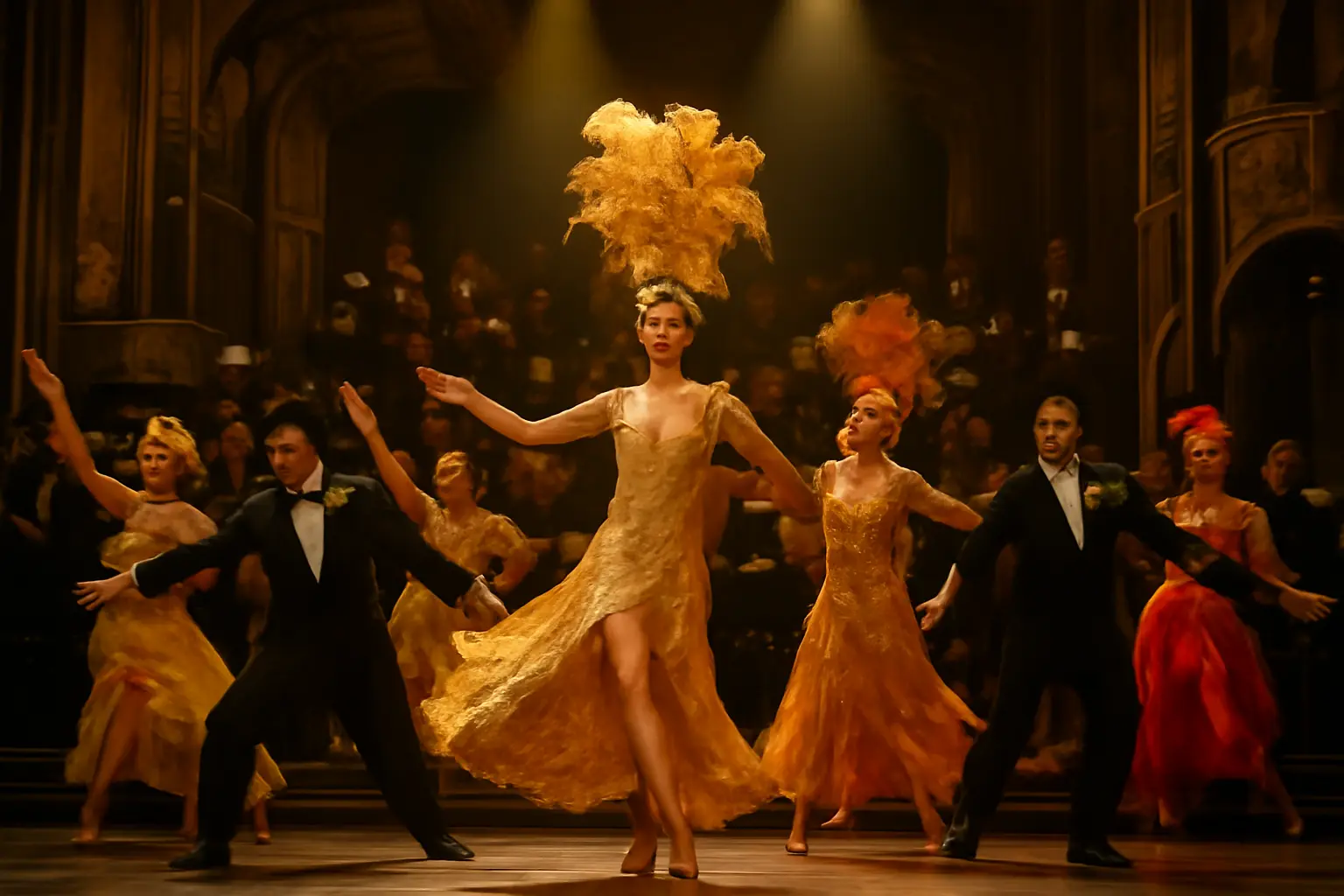
Movie musicals are built differently from most other films. Instead of dialogue carrying the plot forward, songs and musical numbers do the heavy lifting, pushing characters into decisions, revealing what they can’t say out loud, and moving the story from one scene to the next. This is what separates a genuine movie musical from a concert film, and it’s a distinction that gets blurred more often than it should.
More on this: Harmonies of Harmony: Exploring the Best Songs About Music.
Movie Musicals Are Not Concert Films
A common mistake is assuming that any film built around music qualifies as a musical. It doesn’t. Concert films document a live performance as it happened, capturing musicians on stage rather than staging a fictional narrative. Stop Making Sense, released in 1984, is one of the most cited examples of this format. Rotten Tomatoes describes it as capturing Talking Heads at their peak, praising its “colour and visual wit” — but it’s a record of a performance, not a story told through song.
Movie musicals work the opposite way. The songs are scripted, timed, and placed to serve characters and plot. A song in a musical exists because the story needed it at that exact point, not because a band happened to play it that night. This is the core reason critics and film historians keep these two categories separate, even when audiences lump them together casually.
How Songwriting Techniques Turn Numbers into Story Beats
What makes a musical number land isn’t just melody — it’s craft. Writers working on musicals often rely on specific songwriting techniques to make sure a song does narrative work rather than just filling time between scenes. Some of the more common approaches include:
- Reprise — bringing back a melody later in the film, often with new lyrics, to show how a character has changed since the song was first heard.
- Button lines — a final lyric or musical hit that closes a scene with emotional punctuation rather than trailing off.
- Diegetic staging — songs that characters seem to sing “within” the world of the film, as opposed to numbers that exist purely for the audience.
- Motif planting — a musical phrase introduced early and echoed later, tying separate scenes together without dialogue.
These techniques are why the strongest musical numbers feel inseparable from the plot around them. Remove the song, and the story loses a beat it can’t easily recover elsewhere.
Best Love Songs as Narrative Shorthand
Few tools in a musical’s arsenal work as efficiently as a love song. A well-placed romantic number can compress an entire arc — attraction, doubt, confession — into a few minutes, without a single line of spoken dialogue. This is part of why so many of the best love songs in film history come from musicals rather than dramas: the format gives songwriters permission to let emotion take over completely, rather than filtering it through naturalistic conversation.
A love song in a musical isn’t decoration. It’s often the scene where two characters say the thing they’ve been avoiding for the entire film. That’s a different function from a love song playing over a montage in a non-musical film — here, the song *is* the confession.
Why Some Songs Become Timeless Tunes
Not every musical number survives past its opening run. The ones that do tend to share a quality: they work outside the context of the film as well as inside it. A genuinely timeless tune can be lifted from its scene, played on the radio, covered by other artists, and still make sense emotionally — because the songwriting itself is strong enough to stand alone, not just in service of a plot point.
This is one reason certain musical films get remembered primarily through their songs rather than their storylines. The tune outlives the specifics of the plot, becoming the thing audiences actually recall years later.
A Wider Genre Than It Looks
The best musical films cover more ground than people usually assume. The category isn’t limited to original stage-to-screen adaptations — it also includes:
- Broadway adaptations, where a stage production is reworked for film while keeping its musical structure intact.
- Musical biopics, where a real performer’s life is told partly through their own songs.
- Parody musicals, which use the conventions of the genre deliberately, often for comic effect.
This range is exactly why “movie musical” is a broader label than “concert film.” Concert films sit in their own, narrower category built around documenting live performance, while musicals stretch across genres, tones, and formats, united only by the fact that songs carry the story.
Getting the Distinction Right
Understanding the difference between a movie musical and a concert film isn’t just a technicality for film critics. It changes how you watch a film in the first place. A concert film asks you to witness something that actually happened. A musical asks you to believe that people would naturally break into song to say what they mean — and the best ones make that leap feel inevitable rather than strange.